



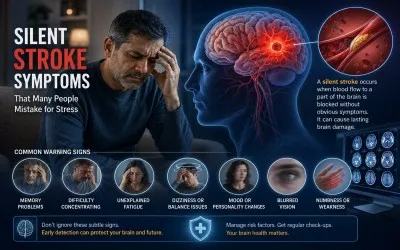
Stress is something that touches everyone in today’s fast-paced world. People often brush off signs like tiredness, forgetfulness, headaches or trouble focusing as side effects of being overworked.. What if these small warnings were not about stress at all? What if they pointed to something more serious? A silent stroke.
At Jain Healthcare Network doctors say that many people don’t realize they’ve had a stroke until its too late.. This is because a silent stroke does not show up like the dramatic symptoms we usually think of—no sudden paralysis, no slurred speech, no loss of movement on one side. Still the damage happens. Brain cells die when blood flow is cut off for a short time. The injury may be small. The effect can add up.
Unlike an ischemic attack—often called a mini-stroke—which goes away in hours a silent stroke leaves permanent scars inside the brain. These changes might only be found later through an MRI or CT scan. That’s why many people walk around thinking nothing is wrong while their brain quietly suffers.
Why Do People Miss the Signs?
Because the symptoms look much like everyday stress, fatigue or aging. When someone feels tired forgets things or struggles to focus they assume it’s a long day. They don’t connect it to a brain event. This delay adds risk. Every missed clue means damage and that raises the chance of a bigger life-threatening stroke later.
Here are some signs you should never ignore:
Memory Problems
If you suddenly have trouble remembering names, dates or recent conversations—especially if it comes out of nowhere—this could mean your brain is struggling. Not everyone remembers everything. Sudden memory lapses are different.
Difficulty Concentrating
A time paying attention making decisions or following a conversation? Don’t write it off as stress. Reduced blood flow to the brain can cause these issues. If you’re finding it harder to stay focused than before see a doctor.
Unexplained Fatigue
Sleep well eat right. Still feel drained? That could be a sign. Your brain may be working overtime to repair itself after a stroke. Fatigue from a stroke isn’t just physical—it affects energy too.
Mild Balance Problems
Occasional dizziness, tripping or feeling unsteady? It might seem minor.. Problems with balance point to areas of the brain that control coordination. Even slight changes should be checked.
Sudden Mood or Personality Changes
Have you become irritable, anxious or sad without reason? Emotional shifts can follow brain changes. If you’re acting differently than usual after stress or illness consider a medical review.
Brief Vision Changes
Blurry vision, seeing double or trouble judging distances— for a few seconds—should not be ignored. These visual disturbances may signal brain injury.
Mild Weakness or Numbness
Even a slight tingling or weakness on one side of the body—like in the face, arm or leg—could be a warning sign. It doesn’t need to be blown paralysis. Any numbness or weakness on one side needs evaluation.
Who Is More at Risk?
Some people face chances of a silent stroke. Risk factors include blood pressure, diabetes, high cholesterol, smoking, obesity, heart disease sleep apnea, lack of exercise, family history of stroke and older age. Managing these conditions is key to protecting brain health.
How Does a Silent Stroke Impact the Brain Over Time?
Think of it like cracks in a wall. One tiny crack may not seem dangerous.. Over time more cracks develop. Eventually the whole structure weakens. The same happens in the brain.
Repeated silent strokes can lead to:
- Memory loss
- Trouble thinking clearly
- Difficulty planning tasks
- reaction times
- Less problem-solving power
- Trouble walking
- Higher chance of dementia
- Increased risk of a major stroke
These slow changes creep in. You may not notice them happening.. One day when you struggle to remember simple things you might finally realize something was wrong years earlier.
How Are Silent Strokes Detected?
Because they leave no symptoms diagnosis relies on tests. Most patients get a brain MRI, which’s one of the best ways to spot old stroke damage. A CT scan may also help rule out causes. Blood pressure checks, blood tests and heart evaluations are often part of the process. These tools help identify risks early.
People in Gurgaon who want brain health testing often undergo assessments. The goal is to catch problems before they grow worse.
Can Silent Strokes Be Prevented?
Yes many can be. The first step is managing risk factors. Here’s how:
Control Blood Pressure
Keeping blood pressure within limits helps protect small blood vessels in the brain.
Manage Diabetes
control of blood sugar keeps blood vessels healthy.
Stay
Walking, swimming, biking—regular movement boosts circulation and heart strength.
Eat a Brain-Friendly Diet
Fruits, vegetables, whole grains, lean meats and healthy fats support brain health. Limit salt, sugar and processed foods.
Get Sleep
Untreated sleep apnea increases stroke risk. If you snore heavily or wake up tired ask for a check-up.
See Your Doctor Regularly
Annual health exams can find problems early—before they cause brain damage.
When Should You Act Immediately?
Never wait. Mild symptoms matter. Call for emergency help if you have:
- confusion
- Trouble speaking or understanding
- Vision changes
- Face drooping
- Weakness on one side
- Loss of balance
- Severe dizziness
- Sudden numbness
Time is brain. Quick treatment means damage and better recovery.
For care contact Jain Healthcare Network, in Sector 56 Gurgaon. They offer brain imaging, stroke risk screening and personalized treatment plans. Their team focuses on protecting brain health for the term. Early detection makes all the difference.